Saturday, January 06, 2007

Onto the wooden bits

The last few days have been lousy weather - cold, with gusty rain storms. Not really the sort of weather for putting down joists and underfloor insulation as planned. However, the work went ahead nonetheless, and we just hope the builders know what they're doing.


Suddenly the house looks bigger than when it was just a piece of string on the ground, and then a concrete slab. The floor is higher than I expected, and the viewpoint from the first floor windows should also be better than I hoped.


These are little holes between the floor level and the foundation. The idea is that air circulates freely inside the foundation and keeps it dry.


Batts of fibreglass wool are inserted between the joists, resting on netting stapled to the underside of the joists. Looks cosy.


The lads are at work while keeping a weather eye on the rain clouds out at sea. This was the wrong place to be looking as the unpleasantness comes in from the mountain behind. I hope they will make haste with their tarps when the rain starts.

Within two weeks, the walls and windows are expected to be in place and the roof following soon after. Let's praying for good weather. The next two days of snowmen definitely does not count as good weather.


I spent my time profitably mulching my beans and peas with cherry leaves. I don't know if this is a smart thing to do or not, but the farmers in these parts have all done something similar with black plastic. I trust that cherry leaves will not be more harmful. The onions have been fed with one trayful of worm casts from my Can O' Worms.


The other day with some very useful help from the young master, I dug out some significant chunks of concrete from the rock pile, and formed the outline of the second row. There's an awful lot of cement in this soil, so I imagine I won't have to use any lime for a while.

Wednesday, January 03, 2007

Sunday, December 24, 2006

A morning with carbon

On Saturday morning, I captured the free carbon resource in my neighbourhood. That is to say, I bagged up a load of dry leaves to make leaf mould.

Last year, I collected fallen leaves from a group of cherry trees in the neighbourhood and mixed some into my compost bins and put others directly on my garden as mulch. The mulched ones dried out and blew about, making a bit of a mess in the garden. Some of them rotted down though, adding a nice layer of brown, worm-rich soil on top of the beds.


The leaves clog up the drains and look 'untidy'. So all the people who passed me and saw me assiduously 'clearing the drains' said encouraging things like 'Oh that looks much better now, nice work!'


The leaves were a very mixed bunch with nice, woody, spicy smell. Some of the trees are the ones they put in gin (juniper?) They were very dry, so I watered them with a few watering cans worth of water from my rainwater butt and sealed up the bags to let the leaves soak.


I also got a couple of bags of sodden cherry leaves that the neighbourhood leaf gatherers keep stored in a large container, and took the lot to the plot. There I erected a rough wire frame and built a pile of leaves interspersed with layers of soil. Hopefully in about a year's time, I should have a pile of leaf mould, assuming I can keep the pile sufficiently damp.

Tuesday, December 19, 2006

The Canadian stuff arrives

On Saturday the wood arrived from Canada. It went by sea to Kobe, thence by container lorry to Matsuyama port where it was roughly unloaded by elderly, tobacco-powered men. They used some rather unsafe practices like failing to apply the brakes of their forklifts, and clambering onto flatbed trailers using broken, 3-legged ladders.


We were aware from looking at the blogs of other Selco home-owners that the stuff isn't always in exactly mint condition, and indeed, it wasn't. Some of the boards were chipped, cracked, broken or had odd nails sticking out of them, and some of the bags for the insulation were ripped. One had a beetle in it. Still, the stuff was in better nick than I'd been led to believe.


Manufactured to exacting standards in Canadia

The port and warehouses were full of interesting-looking bits and bobs, and I was overcome with the urge to scrounge some free stuff. So I asked our site-manager Kawabe-san if a pile of paving stones was going begging, and it turns out they were. So they'll be carted off to our property in due course. Whether they'll look so beguiling in their new environs is open to doubt, but we shall see.

A band of scrounging pykies at the docks
"I say, does this belong to anyone?"

Sunday, December 17, 2006

Concrete

On Friday the concrete was poured. The rain stopped and on an unseasonably warm day, four concrete mixer trucks came and unloaded concrete into the forms.

It takes only one day for the concrete to get mostly hard, and then several weeks for it to harden fully.


These chaps had the right forms even
if our land surveyor didn't

As watching concrete being poured isn't that interesting, I went for a short stroll about the neighbourhood. I found a whole web of interconnecting pathways leading all over the hill. These will be very nice to investigate in breaks between work. There are some ponds that I might be tempted to swim in too.

Our place is to the middle left of this picture
(but not visible)

One of the paths led me to the local shrine, Takanawa Jinja, where they have a big man in armour sitting in a wooden shed. It looks like considerable care and reverence went into building him.

The big man in our neighbourhood. This is Mr Kono,
after whom the neighbourhood is named.

Sunday, December 10, 2006

Foundations

The rezoning permission came through, quickly followed by planning permission. By that stage, the foundation contractors had already dug the foundation trench and filled it with gravel. The people who did the rezoning gave us our first experience of evil contractors - people who submitted the wrong forms, late, and tried to blame it on the other contractors, and threatening to sue us for not paying when we suggested that a discount might be in order for very late delivery.

The pictures start with the first concrete poured in the trench. Then one man very quickly set up the metal forms and began the work to set the rebar in place.

In the morning

In the arvo. Forms in place, rebar going in.

The work was done with amazing efficiency by
just one tobacco-powered man in his 50s

Overall view. The pond will go where the pile of
soil is.

The house seems very close to the graveyard, so we'll want a good hedge between us and it. The views are going to be a joy. Now that the foundations are started and we have a 'concrete' image of where the house is going to be, we can start doing things with the garden.


Sunday, November 19, 2006

Digging up the sasa bamboo

I went to the plot today to dig up sasa bamboo and check that the drain has been put in as scheduled.

A distinct scar in the road

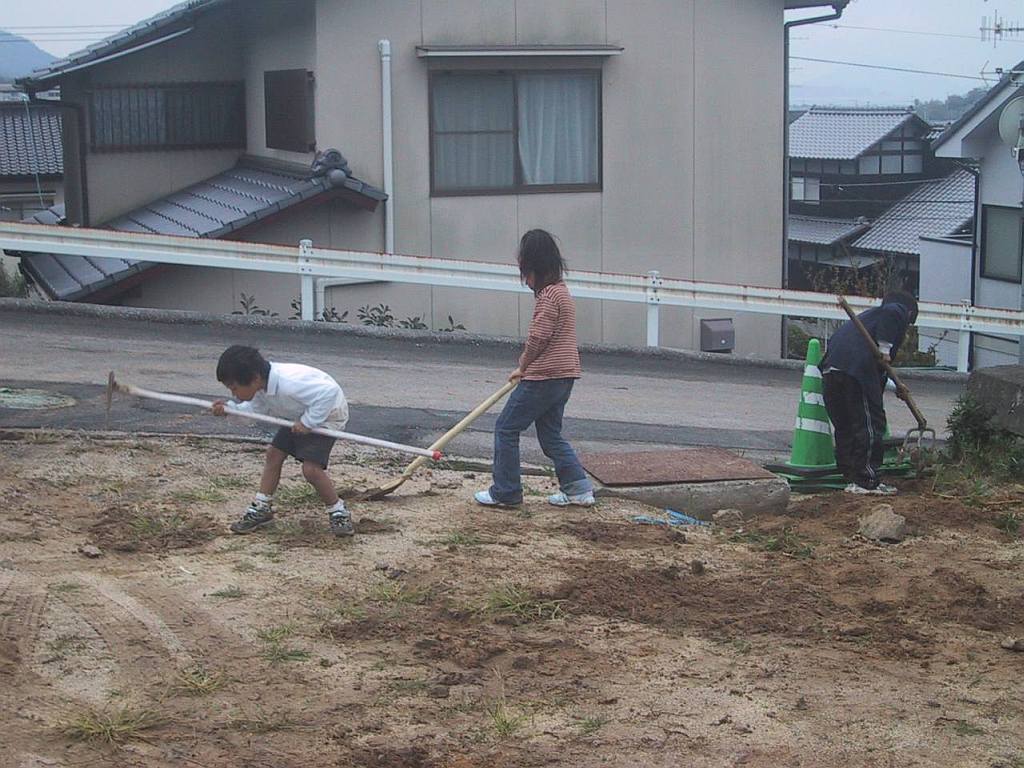
As soon as I set to digging up the bamboo that has grown back, three volunteers turned up and promptly commandeered my tools, leaving me with nothing to do but take photos. There's Sho-kun (9), Nana-chan (7), and her brother (7) whose name I didn't hear. They worked really hard and used the big tools with considerable skill, and invited themselves back for more unpaid child labour next time.


Tuesday, November 14, 2006

Solar, wind turbine, and electric car

So we already have the solar system built in and the sunshine taken care of. Since our electrical needs are already very low, I'm expecting some excess power generation, and it saddens me to think this is going to go to Yonden, the local power company for a pittance.

Now our car is getting old, and petrol is not getting any cheaper. And both Subaru and Mitsubishi are talking about producing electric passenger cars in 3 years or so.

Subaru R1e

Mitsubishi iMiEV

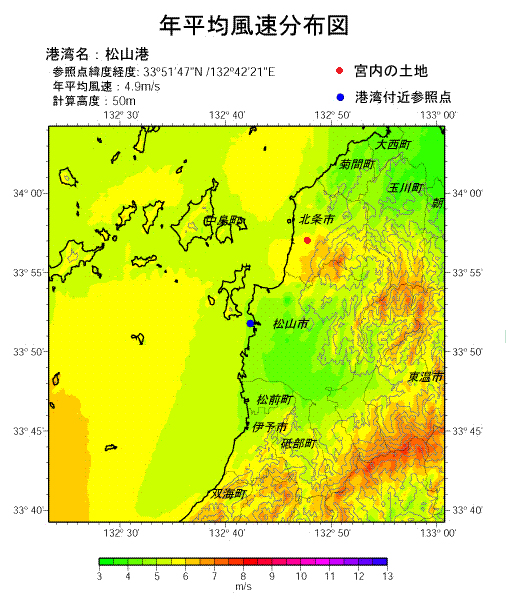
It occurs to me that getting an electric vehicle at some point would be a good way of soaking up the excess juice, assuming there is any. And if there weren't enough, the area where our house is to be is known as a windy area.

Wind map of Matsuyama

So the questions are, is the wind strong enough to merit a wind turbine, and which one to get?


These are the good bogs

I've been very bothered about our toilet. I wanted a composting toilet but was overruled on the eminently practical grounds that we won't be digging any sort of basement, and there's nothing standard about them. Also, the companies I looked at didn't offer much in the way of advice that a builder might use.

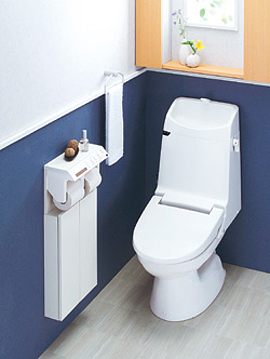
So for a small, extra consideration of 10,000 yen per lavvy, we're going to get two Inax water-saving toilets. These will be connected to our own purification tank.

Pretty sleek for a modern lavvy


Apparently, for a family of 4, you save 1 bath's worth of water every 2 days. I think there's probably rather a lot of flushing going on in that family, and we'll be saving less, but it's all good. They use 5~6 litres per flush as opposed to 13 litres for a normal bog. That's half the CO2 for processing and pumping saved as well. It'll almost be tempting not to go and fertilize the trees in the garden.

Sunday, November 12, 2006

The diggers are in!

Today we went to the plot with digging implements for everybody for a joint effort in digging up the sasa bamboo that was supposed to have been removed and that is running around all over the place. We also had boxes of cake to give to all our immediate neighbours by way of advance apology for the noise that will be caused by the work to put in new waterworks. We were passed once by a girl who exclaimed to herself "It's the Englishman!". I thought those days of wonderment about foreigners were past, but apparently not.

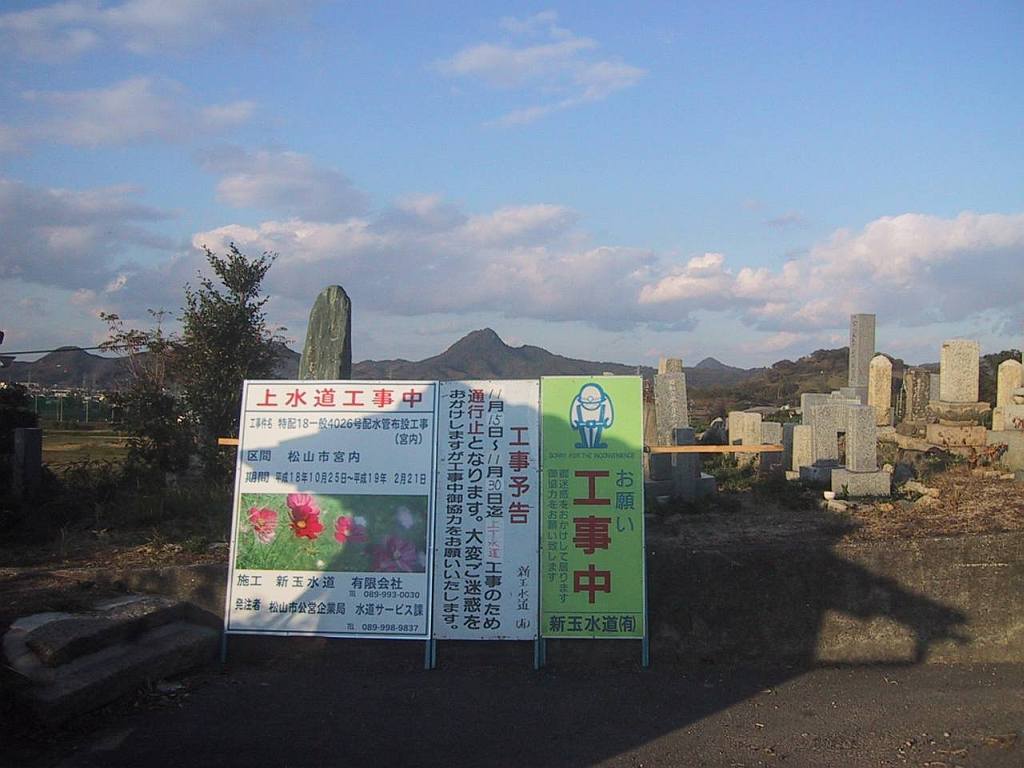
As we drove up the hill, we saw the sign giving notice of our waterworks. It's a very small thrill to be the cause of one of these notices.

Notice! Englishman's waterworks!

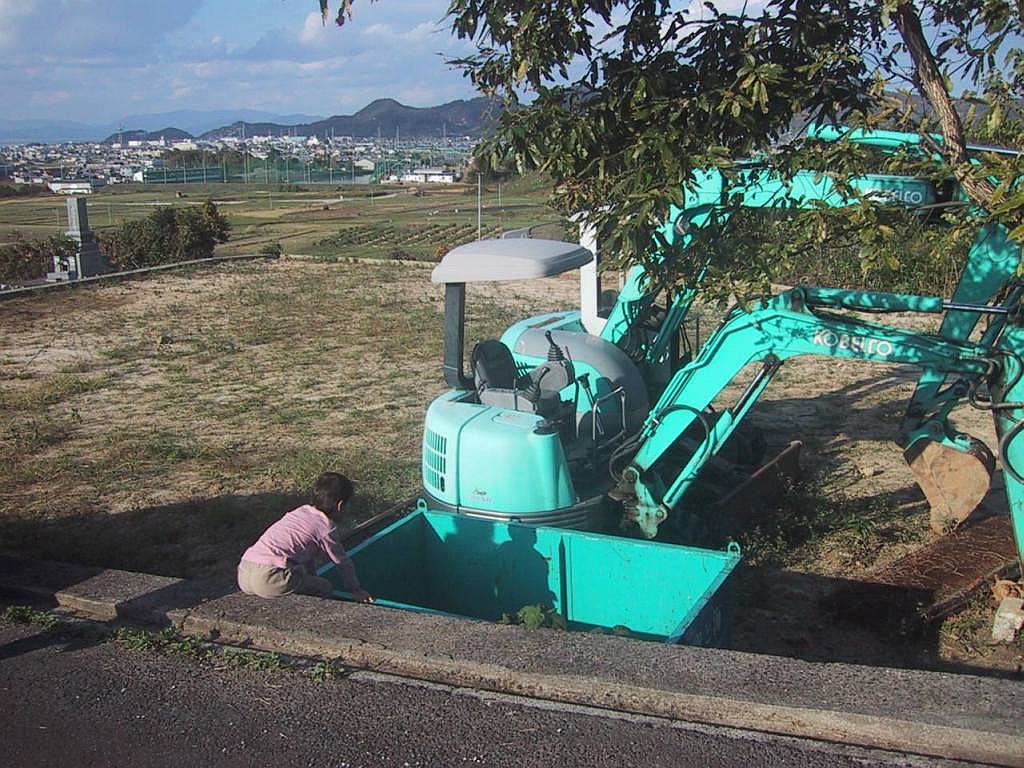
When we got to our land, there were already two diggers sitting on it waiting to start work. This gives quite a strong impression of Something Being Done At Last.


Monday, November 06, 2006


Broad beans planted in soil improved with compost, rice husks and worm casts


Each row is being carved out of a mound of building rubble covered with clay soil


The soil contains horsetails which spring up out of the ground when your back is turned


This building rubble is not supposed to be here.
Somebody will have to pay to have this carted away, and it won't be us

Thursday, November 02, 2006

Biotope class


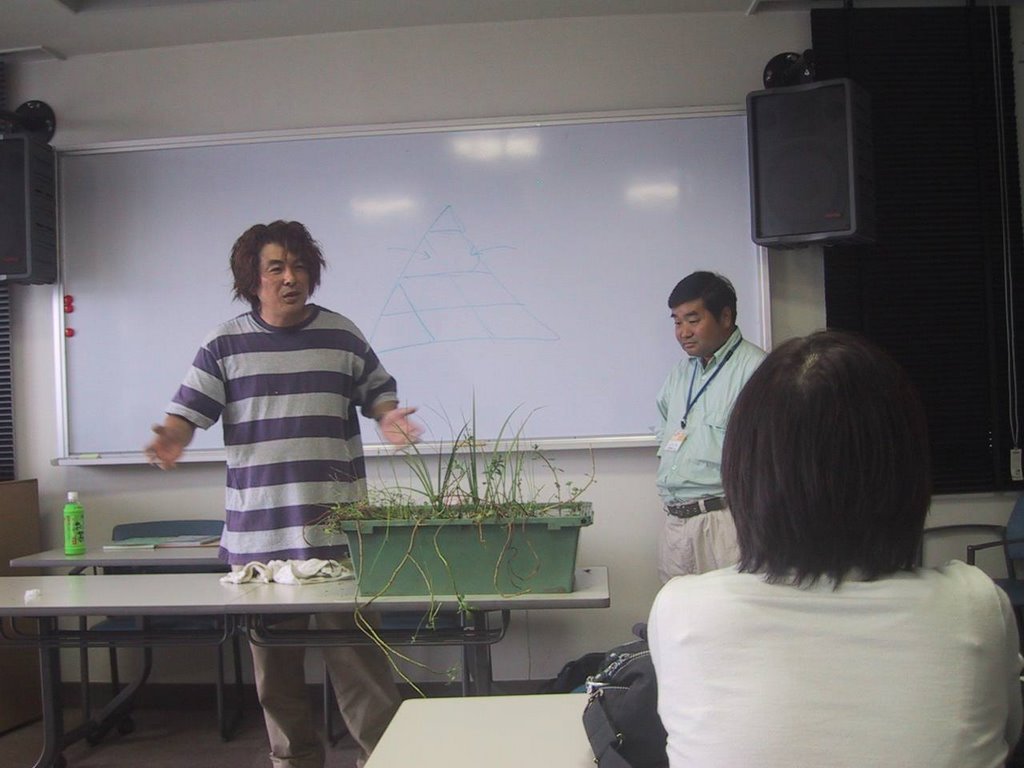
Last weekend we went to the Matsuyama City Environment Education Center to learn about biotopes. These are fragments of ecosystems that people choose to maintain and conserve as a favour to nature. We learned how chemical fertilizers have effectively destroyed significant fertility in the countryside, and that conserving it in ponds and tubs may be necessary so that one day the countryside can be restocked when 'we' run out of fertilizer or see the folly of it.


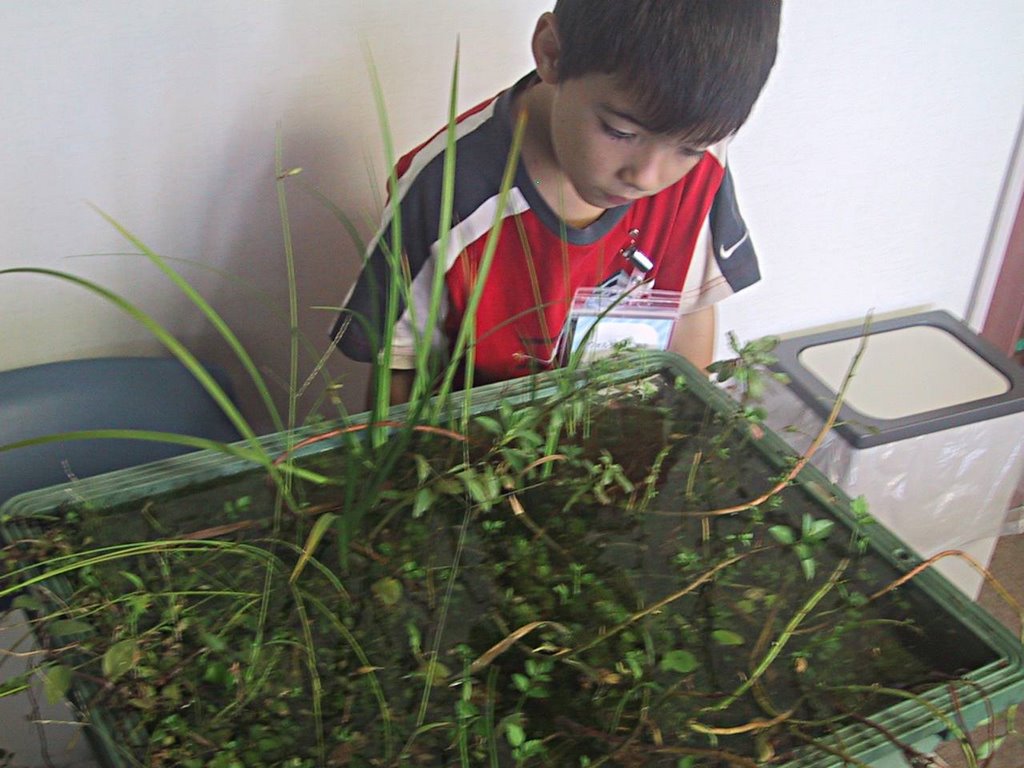
The tub of water proved to be a lot more interesting than at first glance. It had shrimps, tiny fish, and dragonfly lavae living in it. I think we'll be keeping a few of our own, besides the planned pond.

Sunday, October 15, 2006

Pagan neighbours

It appears that our neighbours are pagans. On my way to the plot I spotted what looked like a tree of strange blossoms. It turned out to be a traveling item of festival idolatry. As I got closer to our place I got stuck behind crowds of revellers in fancy pajamas pushing their juggernauts along the roads to the shrine, banging their drums and singing. It looks to be a lively neighbourhood in the festival season.


Accompanied by the distant sounds of my future neighbours enjoying their harvest festival, I tilled my land preparing it for a planting of beans, peas and onions. This was not an easy task as the land seems to be full of ancient concrete blocks that bend the prongs of my fork.

My trusty gloves bear mute witness to the intensity of my labours.

Saturday, September 30, 2006

Garden work

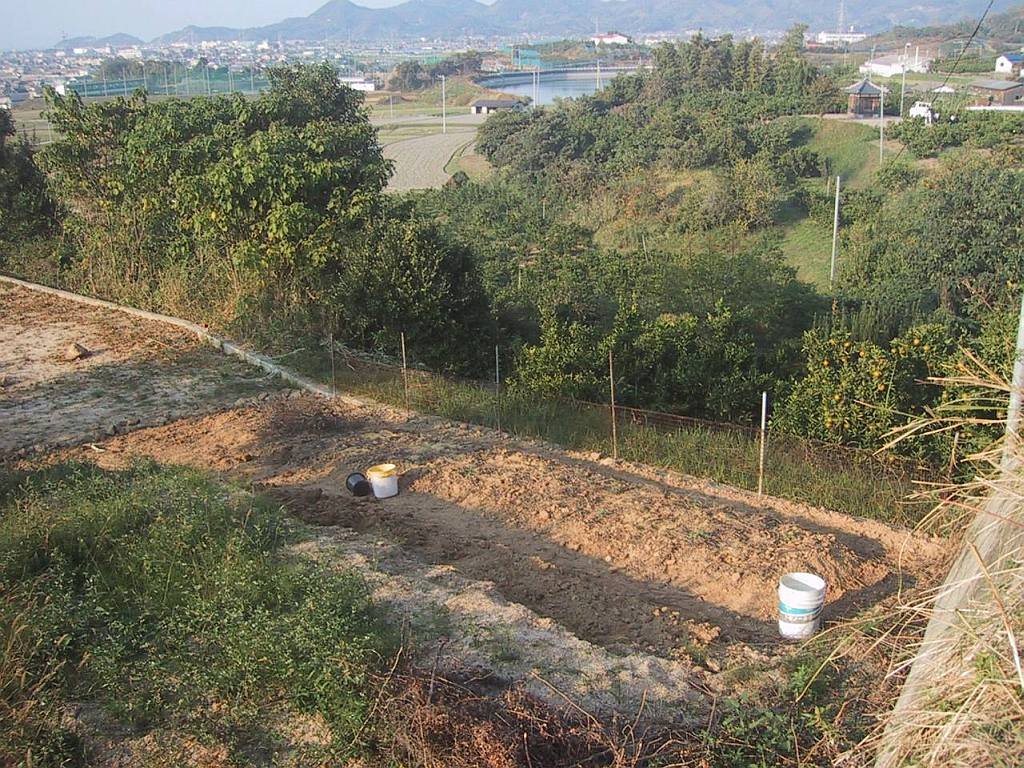
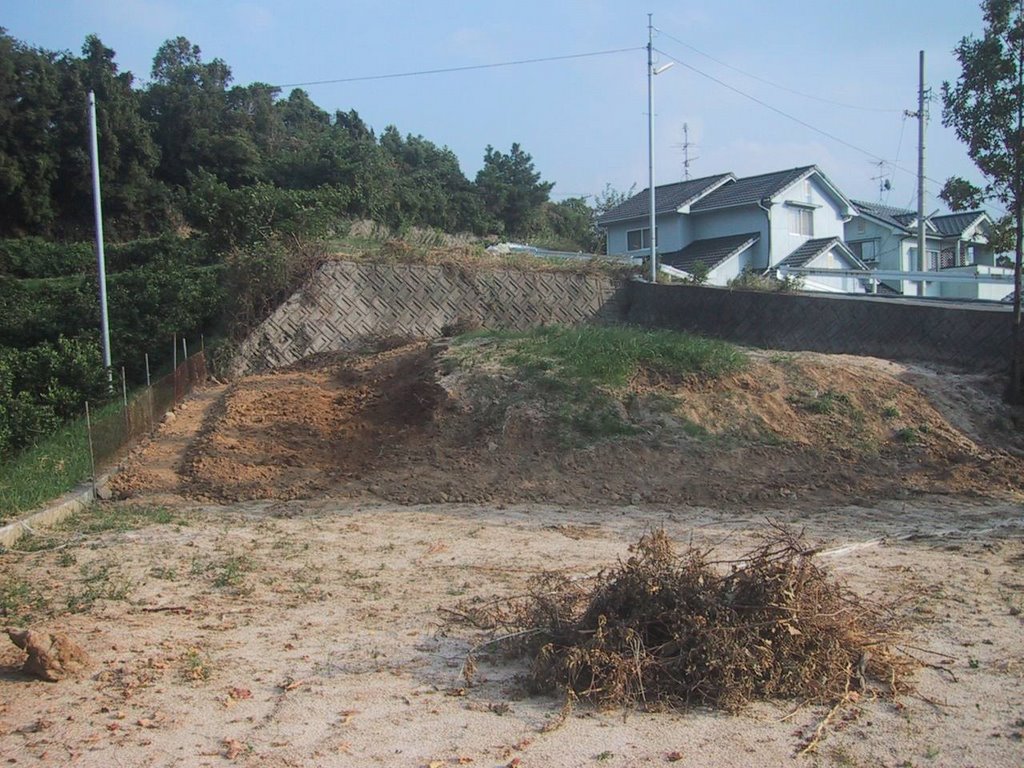
I've been spending every spare moment on the food part of the garden with my big fork, carving off chunks of the hill and reshaping it into raised beds. The soil is going to need a lot of compost and organic matter to change it from hard, light brown lumps, into something fertile.
Some little girls from the housing estate next door came to chat, and they observed to me, "You are a hardworking person". I wondered guiltily if they would say the same thing if they saw me hard at work on a few drinks afterwards.


There is a distinct raised bed in the making on the left. That pile of weeds will have to be processed into compost and returned to the soil.


The same raised bed with the chicken-cage fence next to it, moved from the old allotment.

Another view

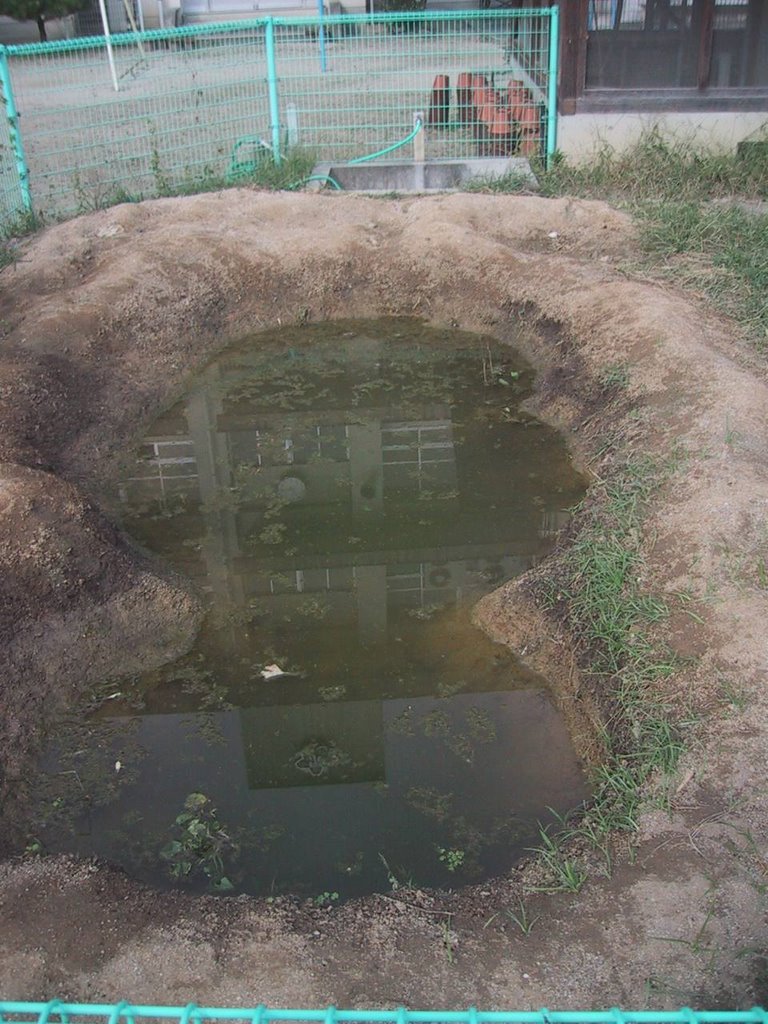
I wish this hole were on our property but in fact it's the new pond at H's school. It doesn't have a liner but it holds the water well. This is just rainwater, with nothing else added. The soil looks similar to ours, so I think I'll only have to dig a hole, and we'll have a pond. Something about this size, outside my office window would be perfect.

School 'biotope'. Looks like a 'pond' to me.

Wednesday, September 13, 2006

Garden planning


I do like little pots of water plants


Okay, this post is going to be a flight of gardening fancy.

The whole plot will be fenced with some sort of green barrier. Besides solar panels and water butts, Matsuyama apparently gives generous subsidies for hedges (it's good to have a builder who tells you these things). I favour dwarf bamboo of some clumping variety, as opposed to one that runs, but nobody believes such a thing exists. Research is required. Besides being hardy, bamboo would furnish me with useful canes for other garden functions.

The area around the house is going to be turf of some sort, maybe with bunnies on it to keep it short. More research required here.

I'm thinking of a screen of fruit trees between the leisure garden and the vegetable plot. Candidates include various citrus trees bearing fruit at different times during the winter; sweet chestnut; olives; and blueberries. I would like a fig tree near my office window so I can enjoy its scent, but I'm assured that the roots would burrow into the foundations. According to my friend and permaculture adviser Takatsuki-san, the fig should be banished to my uncle's plot up the hill that is bounded on all sides by concrete.

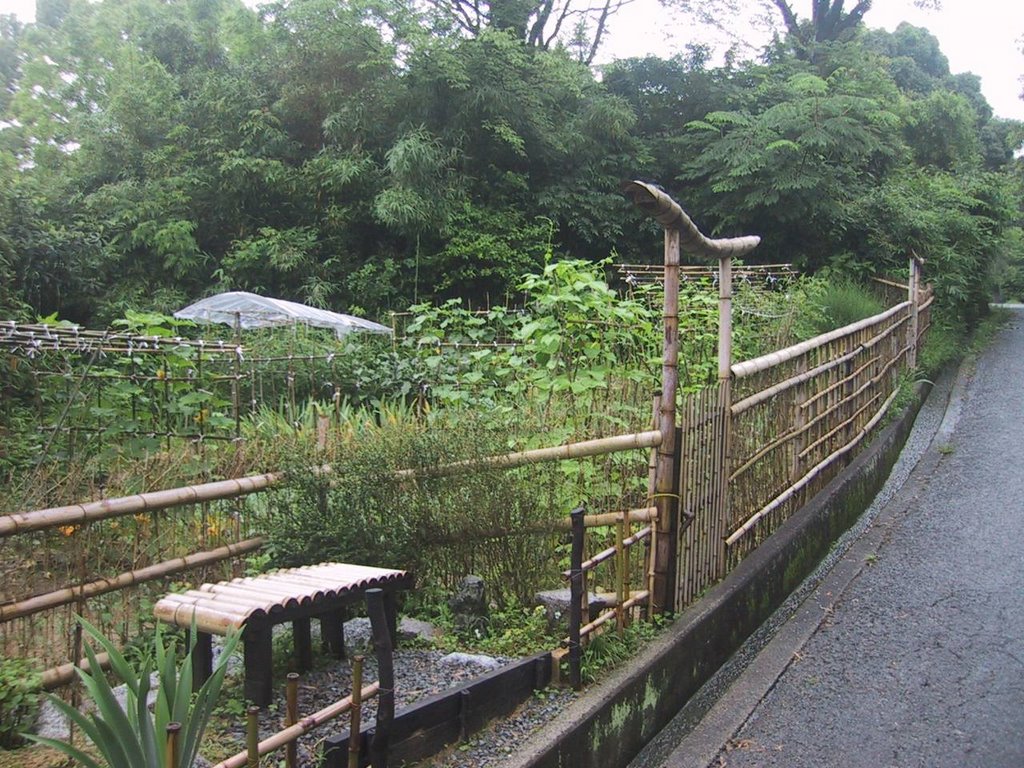
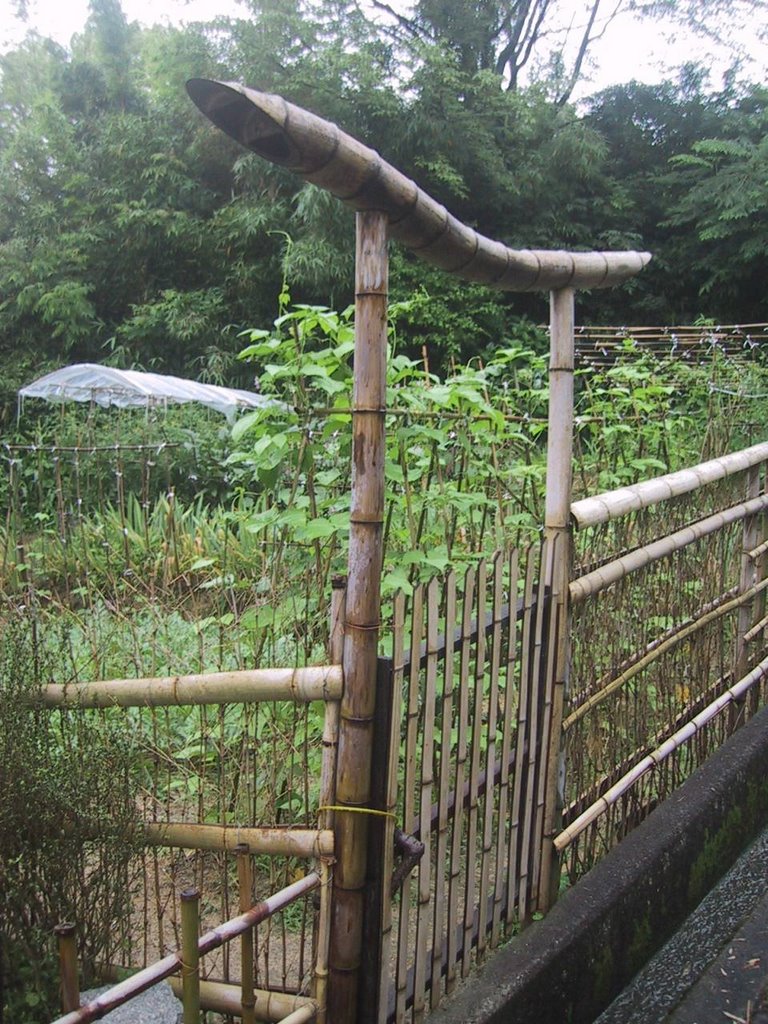
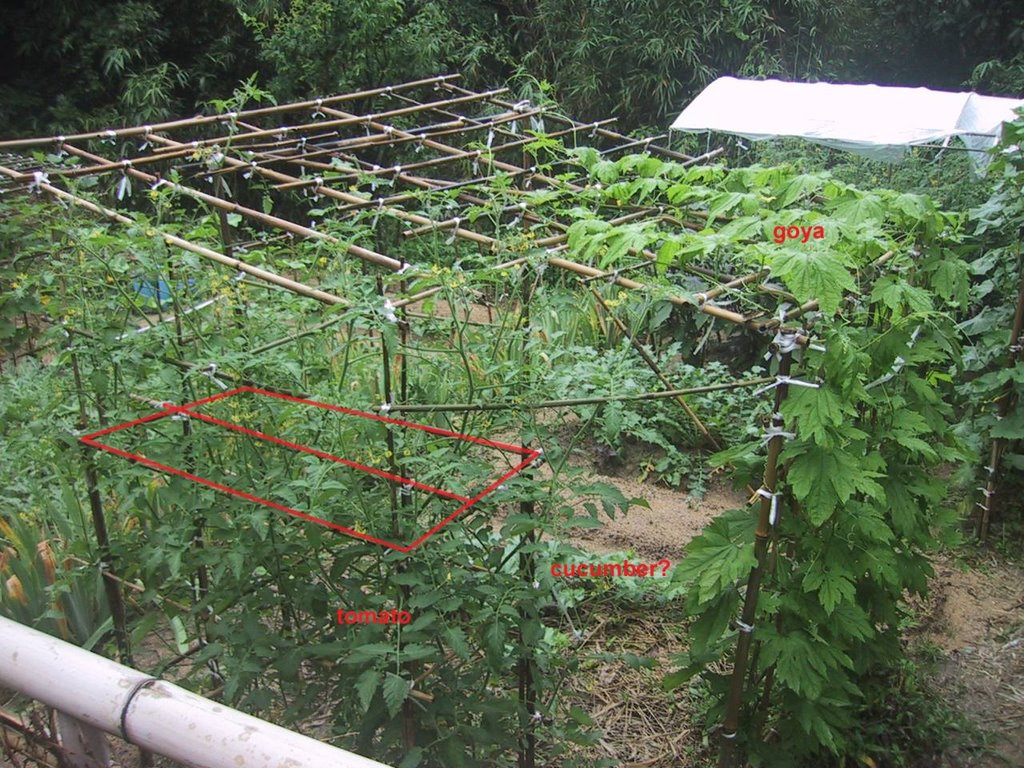
I've been loitering around various allotments over quite a wide area, eyeing up other people's plots. No doubt I've been taken for a potential tomato and eggplant thief. One allotment owner actually asked me quite abruptly what my business was, looking at his rows. (Actually though, I did discover that allotment-fancying is quite a pastime among the 40-60 set in Japan. In front of a particularly well-kept plot in Dogo, I spent several minutes with another admirer of vegetables discussing what a fine garden this was.) Pictures of the Dogo allotment below. The bamboo fencing and seat were particularly stylish touches.


The man had some real wizardry with integrating his shrubs and his climbers:

So now my task is reproduce this sort of thing on our patch. To this end I took my big fork and began levelling the useless hill at the far end of our land. After about 3 hours of forking, I had got this far:


This is maybe one fifth of the task I suppose. It should be a nice feature when it's done. After my forking it felt really good to get into the onsen on the way home.

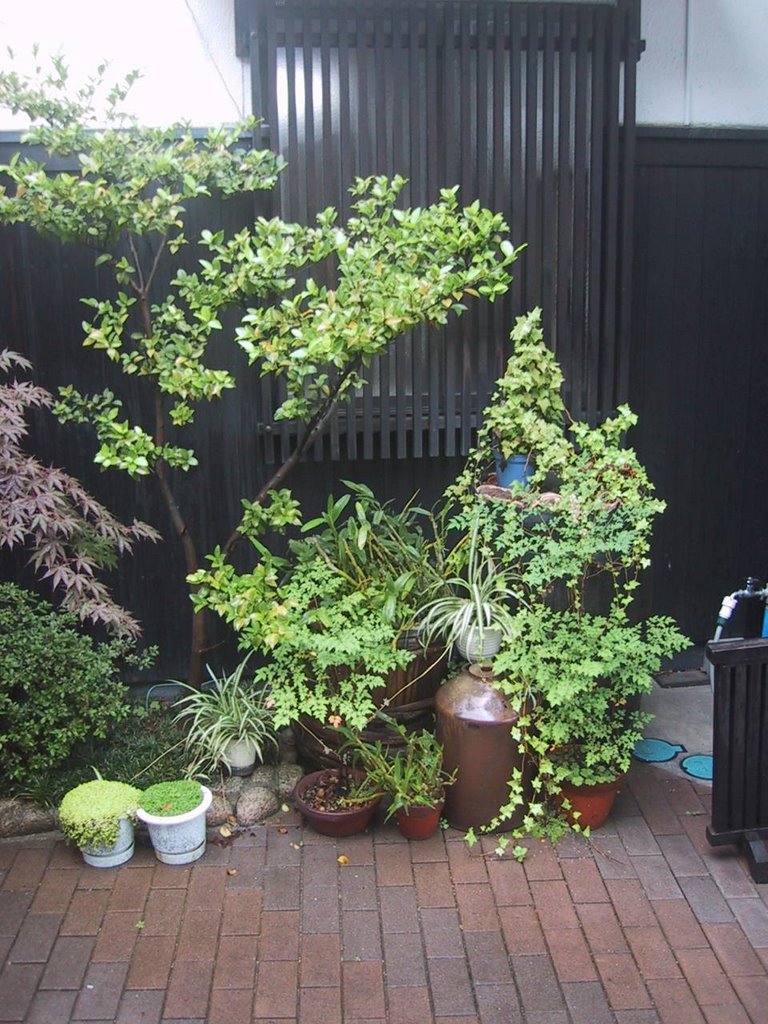
This corner of my favourite brewery in Dogo is the sort of thing I'd like to aim for; interesting pots full of carefully tended greenery, some of it herbal or edible. Actually, they could have taken things a bit further, with bigger pots and some taller plants.


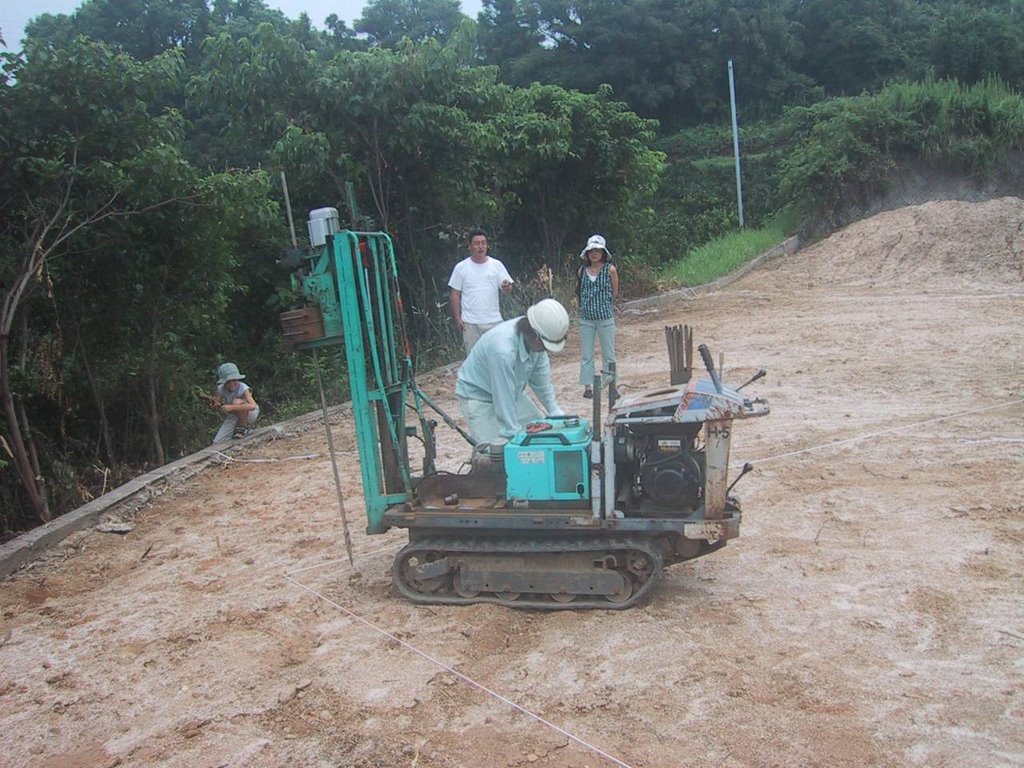
Inspecting the ground - a boring matter

Before deciding on the right kind of foundation, it's necessary to drive a spike into the soil and find out how hard it is. So a young man with a pile-driving/drilling machine with his trousers not on properly came by and drilled holes in each corner of the floor plan and one in the middle.
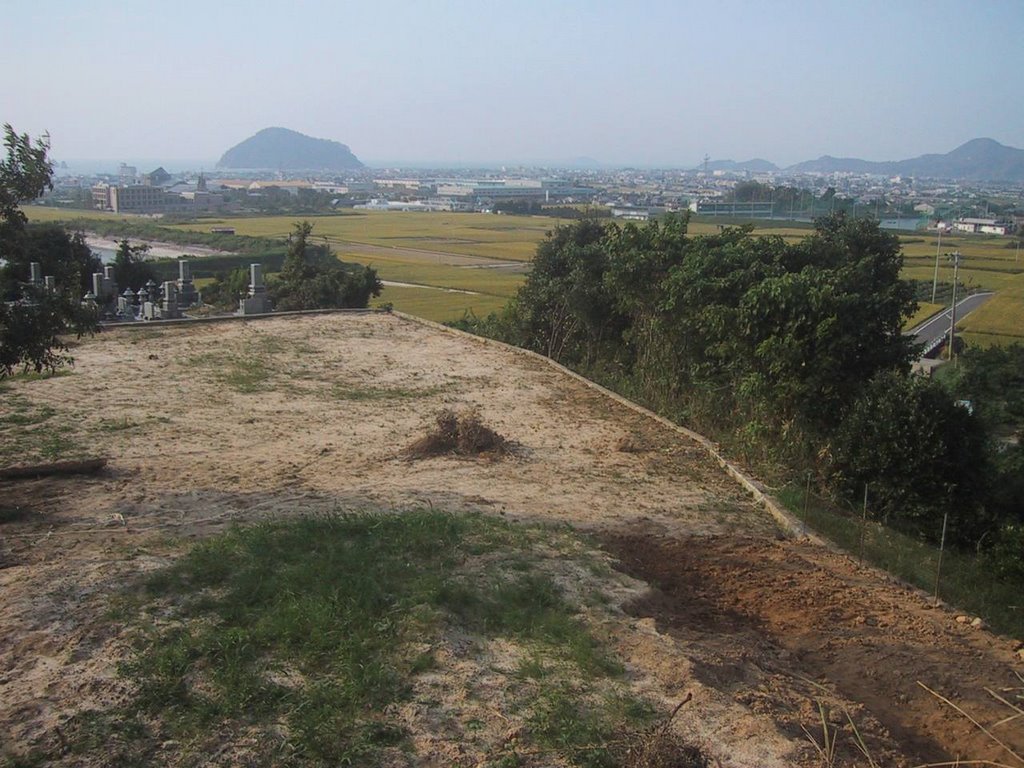


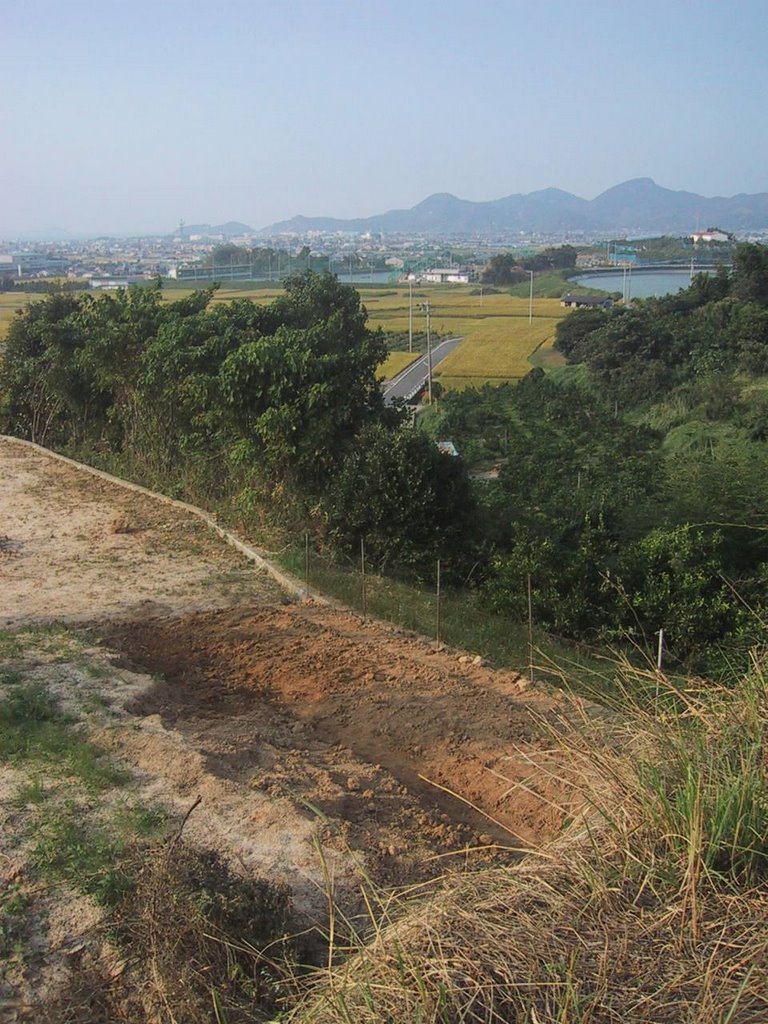
On many building sites apparently, you can drill down about 6 metres before you hit rock. In our case, rock was hit at about 4 metres, which is a good sort of sign. Since our land is a little scraping off a large mountain, this is not really surprising. Many people choose low lying land that is just accumulated silt.
However, although the ground in general was quite hard, there was a bit of a soft spot in a middle layer at one of the corners. So the hole company recommended that instead of a footing foundation (a kind of buried wall essentially), we have a slab foundation that will be resistant to sinking in one place. This will be a little more expensive, but we have budgeted for it.


This inspecting the ground was supposed to have been something of an event, and I was urged to make haste on the way, lest we arrive late and miss something. But as somebody who has spent a good deal of time inspecting the ground in one way or another, I knew that it's not something to get excited about. In fact, it can be quite a boring matter.

Snigger.