Sunday, June 29, 2008

Kneehabilitation

On the New Year holidays before we moved into this house, we visited my mother-in-law and I climbed the mountain behind her house. I used to climb it often before our son was born 10 years ago, and it felt good to be doing it again, especially in the ankle-deep snow. That is, until I stood up after my lunch and found that my knees were very painful. Still, I pushed on up to the top whereupon I realized that the descent was going to be a bit of a killer.

But I'd had trouble with my knees climbing mountains before, and I figured it would pass as it always did. Well, that was when I was ten years younger, and I had no such luck this time. The right knee got better, but the left has ached and twinged ever since. It effectively put a stop to my habit of running up hill and down dale in the dark after work for 30 minutes.

I had it X-rayed - nothing to see. I tried acupuncture. That felt OK, but it was expensive, and it didn't really do anything. Then I tried Kinesio taping but this also was very expensive. And the 'doctor' had a little handheld jack-hammer thing which he discharged without warning into the part of my knee that I had indicated was tender. Had I been warned, I probably wouldn't have screamed in pain. But then I would also have declined that particular treatment. This is what I believe is known as 'informed consent'. You can see why people value it when they go for medical treatment. Anyway, the taping didn't work, although the 'doctor' kept saying "That feels better now, right?"

A doctor at a local clinic mentioned steroid injections, and recommended I not do it for reasons that are unclear. Then I suggested I was bored with having a duff knee and asked him what the 'aggressive' treatment might be in this case. "A steroid injection" was the reply. So I had one, and it didn't work.

Next I tried massage at two different local clinics. It actually seemed to make a difference for a while, and I even started running again, albeit for only 10 minutes on a flat course. But in the end, it didn't seem to work.

Other minor treatments that haven't worked include the application of electricity, ultrasound, infrared, and magic. I didn't really want the lady in question to try the magic, but I was too polite to refuse.

The next recommendation was either a course of hyaluronic acid injections or an MRI scan, followed by surgery. I've pretty much decided to try the hyaluronan treatment, but this Friday at lunchtime I saw a program about a newish sports treatment called "kaatsu training", or I suppose, "applied pressure training" in English. This involves constricting the blood vessels of the arms and legs before doing light exercise. This works the muscles harder and when the constriction is removed, the blood vessels increase in size, and beneficial hormones are sent to the tissues of the limbs. It seems to have a sound scientific basis, and it is also supposed to have helped bed-ridden old people get up and walk again. Apparently it's also used on racehorses. (But then arsenic used to be used on racehorses too, with famously unfortunate effects.)
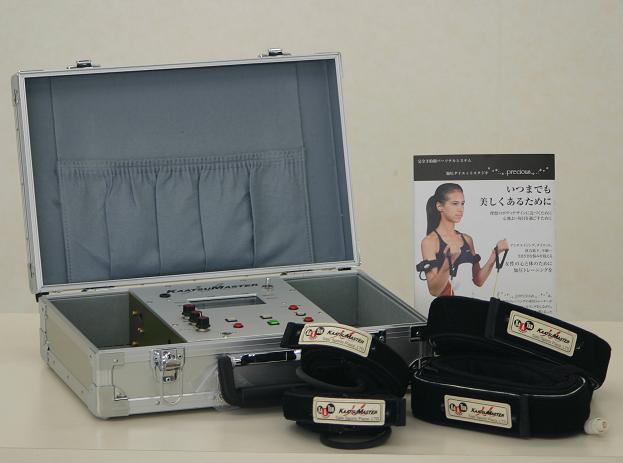
Anyway, I found a place in Ehime that does kaatsu training, and went on Saturday morning. The youngish man who conducted it on a one-on-one session inspired confidence. He made no fantastic claims, and was pleasant and gentle. Having one's legs constricted actually felt good, and the exercise wasn't at all challenging. He said I had strong legs. But lifting a small dumbbell with my arms constricted ... hurt. Not too badly, but he suggested I try to put up with it since it was normal, so I did and it was OK. He said he thought I had weak arms.

Then he asked if I knew what chiropractic was. Rather insensitively, I said, "That's the therapy that people say has no scientific basis, isn't it?" He mildly assented that that was indeed said of chiropractic, but that he believed it was effective. I had images of violent, dangerous spine manipulations and was getting suspicious.

He asked if he might check out my alignment, and when I agreed, he stood me in front of a mirror and felt lightly up and down from my shoulders to my ankles. It struck me that no other practitioner had done this, and it seemed like a very obvious and necessary first step. Then he offered a further check lying down. After manipulating my ankles, he suggested I had twisted my left ankle badly at some point. Indeed, when I was about 16 I had jumped over a wall, caught my heel on top of it, and been immobilised for about a week. I immediately conceived considerable respect for this style of treatment. I asked him more about his chiropractic and he told me that he too distrusted the 'crick' methods, believing that they do incremental and permanent damage. He favoured careful stretching under the patient's own power.

I don't know yet whether the kaatsu training is going to work, but at least I'm confident that I've found a specialist worth his salt. Nothing he said or did put me off him, a first.

Now you may very well be wondering what this has to do with sustainability, the general topic of this blog. Well, if something goes wrong with your health, you can no longer sustain some of the activities that you did hitherto, and your general health begins to suffer. By not running, I lost a method of relieving stress and I gained weight. And in an effort to regain your health, you travel around more than you otherwise would, you use energy in various forms, whether electric or magical, and you consume a variety of medical products whose production methods you may not be overly pleased to learn about. And so finding the best method of treating your health issues has implications for sustainability, both of one's own lifestyle and the wider world. If kaatsu training and a little chiropractic turn out to work, I'll be very pleased as they're about as close as you can get to self-regenerative medicine.

Tuesday, June 17, 2008

First summer produce

So far this year we've had rain at least once a week, often more, interspersed with sunny days. This has been most beneficial for growing.

Today I was in charge of my own lunch, so I took my little basket into the garden and picked myself a 'sallet'. I had 'asparagus lettuce' which is a fantastically productive cut-and-come-again variety. I planted three, and we've eaten vast bowl-fulls of it for weeks now. I also cut some peppery nasturtium leaves (which the rest of my family refuse to eat for their own irrational reasons), and some Italian parsley. The first tomatoes had ripened and not split open in the rain, so I got a few of those. I had already plucked my first couple of cucumbers and they were in the fridge. I chopped one of the onions that had failed to grow into a proper one. These are often the object of unkind comments when first brought in from the garden, but for adding a certain je ne sais quoi to a salad, they have their uses. I must say I felt a little bit twee photographing my wicker basket while thinking hey-nonny-nonny things about 'sallets', but the first pickings of summer are very satisfying nonetheless.

Other good things include a pumpkin, an aubergine, and some peppers. These formed the basis of a nice early summer curry this evening. Either the pumpkin isn't a very flavoursome variety, or I just failed to feed it the right things, but it was little on the bland side. I'm hoping that my American heirloom sugar pumpkin will be more tasty. It's coming along a storm. And this year, I'm doing a better job of controlling the weeds (nothing clever, just more time spent picking them), so I'm definitely expecting good things.

One of several firsts this year was garlic. My friend assured me, "Even an idiot can grow garlic", and he was right. Each little clove miraculously turned into a bulb, without much more than mulch and a bit of weeding. The 'farmer's shelter' thoughtfully by our builder Hidaka-san really comes into its own for curing garlic.

The rice paddies are now mostly flooded and the rice seedling have been planted. The frogs are making an absolutely stunning racket, especially at night. Sunsets in the spring are not generally very photogenic, but the hotter weather is bringing something a bit more interesting to look at.

I heard today that Kadota-san of Khome's, who we asked to make a plan for our house, has died in a car accident. This is very sad news. Kadota-san was a talented architect, and a charming person. He will be missed by many people.

Sunday, June 08, 2008

Can-O-Worms canned

Kitchen scraps gathered in an enamel dish

About four years ago I bought a Can-O-Worms which I had sent from Australia where they're made. I seem to remember it cost about 16,000 yen. I also bought a big bag of worms from somewhere in Gifu for about 5,000 yen. The bag contained about 1,500 worms.

Can-O-Worms on the left with yellow bucket

At that time we had an underground concrete garage with a metal shutter and I kept it in there. The garage stayed at a fairly even temperature and because it was kept closed most of the time, it was almost free of flies. Since it didn't get very hot, the kitchen scraps didn't smell, unless you took the lid off and put your face inside, whereupon you could detect the smell of decay. But since flies rely on their sense of smell for their livelihood, they can detect that smell even if you can't, so chances are that if you've got your face in the bin checking the smell, a fly that has been waiting patiently nearby has also slipped in and laid some invisible eggs. These will hatch and then you'll have maggots in the bin.

With the Can-O-Worms in the garage, I usually had vinegar fly maggots and soldier fly maggots most of the time. Vinegar flies have a life-cycle of about one week, so there are always adults to fly up in your face to greet you, and always maggots on the go. Soldier flies are admirable creatures in many ways. The adults are quite handsome flies, they don't sting or do any harm, and the larvae are voracious eaters. But when you're trying to keep worms, having a bin full of large white maggots can seem a bit disappointing. Worm casts are supposed to have almost magical properties in terms of growing vegetables, but I've never heard anything to that effect about maggot poo. But because soldier flies have a long life cycle, they're not a constant airborne nuisance like the other flies.

The situation in the last house was tolerable. There were not enough flies around to bother anybody else in the garage, and there was no noticeable smell. I had a very small garden, so whenever one tray from the Can was full, it actually contributed a significant portion of additional soil. And this soil was quite a nice black, soft, inoffensive substance. The liquid 'tea' that dripped slowly from the tap also seemed to do the plants good. So for the couple of years that it was in the garage it was fine. During that time I tried a number of things to defeat the flies completely such as using shredded newspaper, sheets of newspaper, scattering rice husks on the surface, occasionally adding garden lime and so on. None of it worked, and the paper was just a big hassle.

Under the balcony

In the new house, the Can-O-Worms went outside under the balcony. Things started going wrong very quickly. In the cold season from October to April, the worms hardly ate anything at all. In the hot season, they ate, but the scraps were quite noticeably smelly, and there were lots of flies. The soldier flies found a way of laying eggs by scraping their little bottoms along the joins between the trays, and when the little maggots hatched, they were able to squeeze through, which they did in vast numbers. There was always a crust of yellow eggs between the trays. The 'soil' produced was not nice. It was a sloppy, fudgy mess with a generally decayed smell. And one tray doesn't go very far when you have some twenty plants as well as tens of metres of hedges.

A crust of soldier fly eggs

Legions of 'toilet flies'

Then at the end of last year, the bin became infested with little moth-like flies. Normally this kind of fly likes to sit alone on the damp towel hanging in the toilet of snack bars. But this time it came in Pharonic numbers. Every time I lifted the lid to put in fresh scraps, they swarmed out, flying up my nose, sitting on my eyelids, and churning dumbly about the concrete floor. I finally decided to try putting a piece of hessian sacking on top of the scraps, which all sources assure one is a great way for suppressing flies. Not only did it not have the least effect on the flies, it became infested with a very merry motley of moulds which degraded it into an annoying mess within about a month.

In your face

The procedure for swapping trays is not all plain sailing either. In theory, the worms are supposed to make their way up to the top tray in an orderly fashion. Well they don't. In fact, they rather like to hang about in the bottom tray of casts which are supposed to be mildly poisonous to them (just as we like to wallow about in bars which are mildly poisonous to us). So the bottom tray has to be placed on the top and the casts removed carefully with a trowel, as you coax the little worms down through the holes to the tray below with the 'fresh' food in it.

Managing the trays (awkwardly)

The trays, being full of a damp soil mixture, are heavy, and you have to lift two of them at a time to get the bottom one out. This is not very good for either the knees or back, whichever part you decide to sacrifice at the time.

Adult worms, baby worms, toilet flies, avocado seeds, eggshells, and sloppy casts

Well today, after much internal debate, I decided to can the Can-O-Worms. I just emptied out the contents of each tray into my two-bay compost heap. I was surprised to find that, after 16 months outside, there were in fact not very many worms in there at all. I think they must have been out-competed by the various fly larvae.

The compost heap however is full of worms anyway. And not just the red composting worms of the type that live in the Can-O-Worms, but the big snakey earthworms too. These attain spectacularly large sizes, so I assume they must eat a lot.


The fresher half of the two-bay compost has a preponderance of the red worms, while the more mature half has lots of the earthworms. This biodiverse situation seems more satisfactory than the monotype that the Can-O-Worms aims for but general fails to achieve.

So to sum up, claims that the Can-O-Worms of worms is fly-proof and easy to manage really are bunk. The suggestions presented for dealing with the problems that inevitably occur also did not work in my experience. However, with a small garden and somewhere enclosed to keep the bin, it may be worth having a Can-O-Worms. But whatever your situation, the same benefits can be achieved by composting and mulching, so I can only conclude that a worm bin is little more than a time-consuming curiosity.

Monday, May 26, 2008

Umeshu jam

Every spring when green plums become available, I make umeshu (plum liquor) by steeping whole plums in 30 degree spirit alcohol with sugar. I normally use the sugar from the sachets that you get with yoghurt. This year, I started using Okinawan cane sugar (kokuto) for extra flavour, and it's very good. This means that the following spring, I have a glass jar with very little umeshu in it, but a lot of alcohol soaked plums. Deciding what to do with them is almost as big a headache as you get from drinking one sip too many of umeshu.

In previous years I've put the old plums in with the new ones, but that just results in a build up of plums and less umeshu to drink. I've also tried eating the plums, but they're offensively alcoholic tasting. One year I put a load of plums in the compost and that seemed to work, although I'm sure it must have killed a few alcohol intolerant critters in the compost.

So this year, I looked around on the Japanese Web under "umeshu jam pressure cooker" and found some very simple recipes for umeshu jam.

The procedure is simple. Put the whole plums in a pressure cooker and add a little water. The picture below shows water up to the level of the plums. The missus suggested this was too much, so I poured half of it away, and it was still too much.

We have a super high-performance pressure cooker, so only one minute of bubbling on the hob was required.

After the pressure dropped, I opened the cooker and found that the fruit of the plums was much loosened from the pits. Squeezing the plums between big cooking chopsticks, I got most of the fruit off, and took out the pits (which will go into the compost). Then I simmered the remaining sauce/jam to thicken it, while stirring with a wooden spoon. Even after pressure cooking, it gave off a very strong boozy smell. Opinion was sharply divided along gender lines as to whether or not this was a good smell.

I used too much water initially, and since thickening it was becoming a bit of a bore, I decided to bottle the product as sauce rather than jam.

I dunno, this looks kinda yucky

It isn't an attractive product. The missus had her nose turned up throughout the whole procedure, and the young master noted that the finished sauce seemed to be full of plum skins. I intend to reserve judgement, chill it and have it with yoghurt. I think that, made with less water, a thicker jam might make the basis of a good Christmas pudding. At any rate, there's no shortage of umeshu plums to experiment with.

Conclusion:
This jam is disgusting. On its own it tastes of nothing but alcohol. It has a very unappealing mushy texture, like all the inedible bits of fruit. In yoghurt, the alcohol taste vanishes, leaving only the nasty texture to spoil the yoghurt.

This concoction is going to go into the compost after a suitable period of quarantine in an open container mixed with some absorbent organic material.

Lesson learned.

Monday, May 05, 2008

Gift seeds

My American friend and colleague in Suwa sent me some seeds which his mum sent him from the US, and I've been carefully nurturing them in pots. In fact, they came along so well, I gave one of each to another American friend here who provided me with coriander last autumn. This seems like quite a lively international exchange of vegetable matter.

I have sugar pumpkins, red Hmong cucumbers, and Black Seaman Tomatoes. The red Hmong cucumbers are Hmong the best in the world (I keep saying this, and it tickles me every time).

This afternoon as the sun was going down, I planted the pumpkins in mounds of compost. The tomatoes and cucumbers should be ready for transplanting next weekend, Insh'allah.

These triffids are also about to flower. I think I better keep my son indoors when they do.

Bamboo beehive

Following on from my post about bamboo, I decided to try making this simple beehive, described in this PDF (you may need to copy and paste the URL in your browser to view it http://www.echotech.org/mambo/images/DocMan/BeehiveD.PDF)

I used a couple of segments from the base of big Moso culm.

Top bar hives are a kind of hive with bars across a box of some sort. The bars are fitted with either a strip of thin board hanging down, or a wood with a triangular section. This is so the bees can hang off it to start making their comb. With this in mind, I stuffed a bamboo twig in each segment hoping that the little hooked feet of the bees will eagerly cling to them without any special encouragement.

The front door ended up being a bit bigger than expected as the interior segments got damaged when I split the culm. So I shut up the hole a bit with some carefully fitted slats. I think it looks most welcoming - I'm hoping that I've achieved the bee equivalent of a nice carriage light.

The back door is just a ragged gaping hole, but I figure that's good for ventilation. I understand that bees have a gubbins called propolis which they use to fix up parts of their lodgings that aren't quite A1, so I expect to see lashings of propolis around that part soon.

I wired the finished 'hive' into our big tree. I chose wire instead of the rope apparently favoured by the Tanzanians because when it blows up here, everything that isn't fixed down flies about and I rather think that bees prefer things to be in Bristol fashion.


There are plenty of bees around, and I'm sure it's only a matter of time before one of them hooks it's little toes over the thoughtfully placed bamboo twigs inside. Realistically though, it seems unlikely that bees will take up residence in a roughly split piece of bamboo, wired into a tree, but if it works in Tanzania, it seems worth trying here. The bamboo 'hive' replaces the bird house we made. No birds ever went near it, but when we took it down, we found a gecko living very comfortably inside it. I wonder what will set up house in our hive...

In the meantime, I'm going to be looking out for a box suitable for a top bar hive, and will go and talk to the bee keepers in the district.

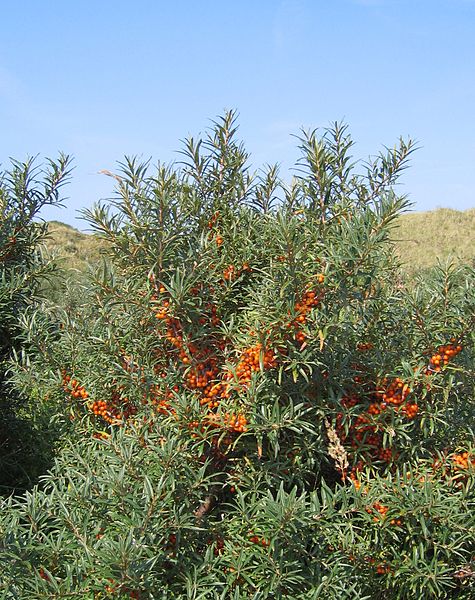
Sea-buckthorn

I found myself reading a blog about cocktails (I have no idea why in retrospect), and it mentioned sea-buckthorn. Since this superfruit also contains protein, it's surely a plant that somebody who plans to keep, but not feed, chickens needs to look at. So without further ado, I found the cheapest vendor of sea-buckthorn on the Japanese net, which happened to be engei.net, as far as I can be bothered to check. This berry has male and female plants and you need at least one of each, so I bought two to be going on with. I figure that if I want more of either later, I'll be able to propagate cuttings.

The sea-buckthorn grows into a big prickly shrub which should be ideal as a hedge for keeping out beagle/terrier mix dogs. With goji and and sea-buckthorn berries, I will surely corner the market in Matsuyama for healthy, organic superberries.

Friday, May 02, 2008

Garden developments

The garden is changing daily with the onset of spring. Plants that looked about ready to die over the winter have suddenly started to grow vigorously and look very promising again. All of the hedges that struggled through last summer's drought looking very pitiful have flowered and put forth new leaves. They look as though they may start to function as screens, as intended.

Likewise the fig orchard is looking lively with longer stems, floppy leaves, and behold! two actual figs already.


The sparrows that live in our neighbours' roofs have produced offspring which are learning to fly, principally by hopping about in our hedges. Their parents squeak encouragement from our trees. Since we've started to open our windows again, it's noisy with them shrieking away.

The wild pink poppy that I found last spring growing on a paddy bank which I seeded in our garden grew slowly over the winter and has suddenly shot up. It's a weird pale green colour that really stands out against the other greens. It's getting ready to flower.

In my wanderings around the neighbourhood, I found myself in the rambling 'yard' of a garden and landscaping operation. Amongst the rocks and other furnishings scattered about, I spotted a nice piece of granite with a depression cut in the top, either for a birdbath or a small pond. As soon as I saw it, I wanted it. So we entered into negotiations with the landscaper and got it for a good price. As it's a bit too deep for a birdbath, I think I'll put some medaka fish and water weed in it.


This weekend marks the start of 'Golden Week'. For some reason, a couple of years ago the national broadcaster NHK began calling it an 'ogata renkyu' or a 'large scale succession of days off'. Seeing as it's a measly handful of days generally interspersed with working days, it's neither 'large scale' nor a 'succession of days off'. In fact the new appellation has a distinctly propagandistic feel about it. While the French exist as a people to show what 'ogata renkyu' really is, the expression should rightly elicit only bitter guffaws. At least it does in my house. Anyway, not to look a gift horse in the mouth, I'm jolly well looking forward to the opportunity of pulling up heaps of weeds before they get the better of me again.

Saturday, April 26, 2008

Olympic interlude

I don't normally let politics intrude in this space, but the business of the Olympic torches has really got my goat, and since I haven't seen the issue covered adequately anywhere else, I decided to have a go. So...

The brouhaha over the Olympics is on again. And what a grim spectacle it is. But nobody should be surprised at that - the entire history of the Olympics is oppressive and statist, heavy with dark symbols.

The 1936 Berlin Olympics is the source of much of it. Believing the foolish nonsense about the Olympics being an 'international movement of peace and understanding', Hitler was at first reluctant to host it. But when his advisers pointed out to him that the Olympics was in fact an orgy of competing nationalisms, his black heart warmed to the idea and he ordered his very talented propaganda people to make it a stunning parade of vile symbols. This they did, and they set the standard for all subsequent Olympics.

Take the Olympic flame for example. This is a purely Nazi invention. Fascists appropriated ancient Greek and Roman imagery for their own purposes, even taking their name from a Roman symbol. The cartoonist David Low satirised the new ceremony with admirable foresight: Various dignitaries bear the torch up from Greece to Germany where a rabid-looking Hitler uses it to 'set fire to an inoffensive Jew'. Notice here how the torch goes through countries that Hitler invaded soon after. Nobody should be surprised at how aggressively the Chinese military dictators have sent their blue-clad goon squad and their irrelevant little flame on a tour of the world. Only a fool would, mothlike, stare at the flame and ignore all the rest of it. And who knows what the flame is going to ignite when it's carried willy-nilly through Tibet as a symbol of the Chinese government's dominance.

It's sad to see sports people being caught up in the 'Olympic movement' because there's really no such thing. Athletes who competed in the Berlin Olympics ended their lives fighting on the Russian Front, while the Olympic City of Sarajevo came under seige and no amount of Olympic movement could stop any of it. If the 'Olympic movement' exists, why do we not hear more of its doings, except as an empty phrase trotted out very occasionally for a bit of orotundity. The Spanish fascist who was Chairman of the Olympics for many years liked to use it. It's absurd to talk about an Olympic movement while remaining totally ignorant of its history.

Nobody stops to ask, "What is the Olympics"? If it's about sport, what are all the tedious ceremonies for? When I play sport, I don't require several days of pageants and speeches before I start. Padding along grinning and brandishing a contentious flame is supposed to be taken for 'sport'? Since none of the ceremonial is in anyway germane to the activity of sport it always has, besides a contentless vapidity, a strong nationalistic bent. What else could it realistically consist of? And if it's not about politics and nationalism, what is all this involvement by national governments about? Why are politicians involved in all aspects of the games? How everybody can wilfully ignore these glaring points amazes me.

Torch runners and sports people are gutless to take part. Even ignoring the origin of the ceremony itself, they are wrong to run within a triple phalanx of taxpayer funded 'police'. I say 'police' because these are no police any more - they've become merely tools of the Olympic games cabal, enforcing the grim vision that lies behind it. It was instructive to see British police on bikes riding down and suppressing citizens who chose to run and brandish their own symbols on the public streets. It was instructive to see the Prime Minister of Australia threatening protestors that police would come down on them 'like a ton of bricks' (what original and picturesque phrasing!). Given this grotesque repression in the name of the 'Olympic spirit', why do none of the sports people refuse to run unless the phalanx of 'police' drop back? Do they not even consider that they might be safer, more dignified, more respected, and better protected to try it? Apparently not.

Now the flame is here in Japan. Protesters have forced the 'Buddhists' at Zenkoji to behave a bit more like Buddhists and not get involved. So the inevitable mindless 'ceremony' took place on a bare carpark. There were hollow suits standing around in the cold applauding the fire on a stick, and gazing at the flame as though it was going to do something interesting or it has some special power. The runners, with their "This is happiest day of my life" grins on their faces, were herded about and manipulated by the volunteer-special-police-flame-attendants and thousands of Japanese police in some sporty new garb, paid for by those of us who don't want any part of it. The runners waved to the gaping public who couldn't see them, and lifted the torch higher when the Chinese police helpfully jerked their arms higher.

While this is all in fact a grim farce on a horrible tradition, it's good that it's happening in a way. You can see fear wiping the foolish grins off the runner's faces at times as they catch a glimmer of what they're involved in. Perhaps they begin to understand what it's like to be a repressed minority. Perhaps they see for the first time the frightening physical powers that governments can bring to bear. This is all to the good. And it's an excellent opportunity for the people of Tibet and their supporters to gain attention for their plight.

But unfortunately these positive aspects can't outweigh the negatives. I can't bear to see the representatives of Western and Japanese protest groups attacking China and the Chinese. China has suffered vastly under the imperialism of these powers, and this needs to be acknowledged, with every utterance if necessary. Meanwhile, these same powers are committing genocides in Afghanistan and Iraq, and soon maybe Iran too. This also needs to be acknowledged, again with every utterance if necessary. Not to do so is gross hypocrisy, and an added insult to the Chinese people. The Chinese people don't have the advantages of a free press and free communications to discuss with each other whether clinging to Tibet or Taiwan is really in their interest. We have these perquisites of liberty in sufficient measure, but that hasn't helped us to prevent our government and our military goons from slaughtering Afghans and Iraqis. So please, let's not hypocritically point the finger at the Chinese alone. Doing so won't incline them to listen to us any more than they do already.

And let's not forget how much CO2 all this empty symbolism is emitting. When the permafrost in the Arctic starts melting and the methane starts burping out, perhaps all the Olympic torches and flame holders can be set up as pilot lights to stop the methane getting into the atmosphere and killing us all.

Friday, April 25, 2008

Bamboo

There's a lot of bamboo around in these parts. Who it belongs to I couldn't say, nor could most people but the owner probably. And judging by the way most bamboo is left unmanaged, it's probably safe to say that the owner doesn't care either. (I've only ever seen one small managed grove, and it was very beautiful in its way.) An elderly lady that I used to do Tai-Chi with kept begging me to go and chop down her bamboo, but I didn't have the time, nor the means to do anything useful with it since her hill was too far from our house for me to carry it.

This means that you can pretty much go into any bamboo grove in your neighbourhood and harvest what you need. But a little bit of know-how is good. So are the right tools.

I have a folding pocket saw, a bill-hook and some forged scissors. These are the essentials. I also have a splitter which is only useful if you need regularly sized slats of bamboo. You can cut down even the biggest bamboo culm with either the saw or the bill-hook in a few minutes, but the saw is neater. The bill-hook is very useful for smashing dry dead culms which get in the way of harvesting and new growth. The scissors are for cutting off the little branches. They must be solid, forged scissors because the ones with pressed handles just deform like wax in your hand on about the third little branch.

So which culms to harvest? This picture shows my local grove of moso bamboo. Moso has big, heavy culms that taper gradually over their whole length. The internodes have what appears as a single line (the other main species in Japan have double lines). The culm walls are generally thick.

This artful shot shows a selection of culms of different ages. Basically anything that's brown is dead and should be cut down ideally. The dead ones in this photo look too far gone to be useful and could just be broken up and stacked tidily on the ground. The culms to harvest are the light, grey-green ones with the black joints. This is oxidized wax which indicates a mature culm. Avoid cutting the dark green culms with white joints. Cutting just above the joint is best so that the stump doesn't become a home to mosquito larvae.

This is a very messy stand of madake (I think). Madake has culms that are straight along most of their length, and double lines at the internode. The culms don't generally get very big and heavy, and the walls are quite thin.

The uses of bamboo in the cheapskate's garden are seemingly endless. They are very good as supports for climbing plants and stakes for weak free-standing plants. Here small branches support peas. I just stuck more branches in as needed.

This is the whole top of a bamboo culm with its branches left on, stuck in the ground for Okinawan goya to grow up. This worked very well last year. Again, more branches can be added as the plant begins to spread out.

Small branches are stuck in to form an X that stops this aubergine getting blown over. When it gets bigger, I'll make a truss of long, straight madake sticks to train the branches along so that the aubergines don't lie on the ground.

When the timber offcuts from building the house run out for making bed borders, I'll start using bamboo again as I used to. Even with the timber, the stakes used to fix them in place are pointed slats of moso, banged in with a little sledgehammer.

Bamboo can be used for fences, tied together with black string. Done skilfully they can be very attractive. Done with little skill, they can look backwoods and ratty.

This ratty fence prevents people trying to turn their cars around on my fig trees, and the little cages stop dogs from standing on them (mostly beagle/terrier mixes).

Ehime Prefecture has a Program to Promote Cyclical Use of Bamboo Resources (woot!) which has just been updated. They have an ambitious looking set of proposals, and they also have a PDF brochure with some useful information about bamboo in the Prefecture, and how to cyclically use it by, well, cutting it down.

I have a couple of books about bamboo. One is Building Bamboo Fences by Isao Yoshikawa. This is a charming book, with beautiful photos and drawings. It makes fence building look really easy, but having tried it, I can assure you that it isn't. Yoshikawa's book doesn't include photos of people with horrible facial injuries, but this is one of the risks involved. Hint: When using a splitter, keep your face well clear of everything. However, the book inspired me to build a fence, however backwoodsy, and to try making other useful things, and when I become more adept, I still hope to make a beautiful kenninji-gaki.


The other one is The Book of Bamboo - A Comprehensive Guide to this Remarkable Plant, It's Uses and It's History by David Farrelly. This book is actually quite annoying. The author attempts a poetic sort of prose, and he seems to believe that bamboo = Zen or some such nonsense, and Oriental = environmentally harmonious. And while the book does cover a lot of interesting information, each practical item is so barely touched upon (compared to the crap about the 'Tao' of bamboo) that it's scarcely worthwhile at all. But it does have some slight value nevertheless.


The Farrelly book mentions bamboo beehives, although typically, it doesn't have any useful information about them, nor any pictures. So I looked on the Web and found this PDF which has a description and images. This is so simple it must be worth trying.

Another thing I want to try is making bamboo charcoal. I don't want to be the only one in my neighbourhood who doesn't issue clouds of smoke.